

Florida rental laws have 2026 updates, so it helps to read on to know these changes, whether as a landlord or tenant. Tenants may not know their rights or what a landlord must do under a rental agreement. This guide will focus on common problems, like the eviction process, written notice rules, and landlord responsibilities under Florida statutes and chapter 83.
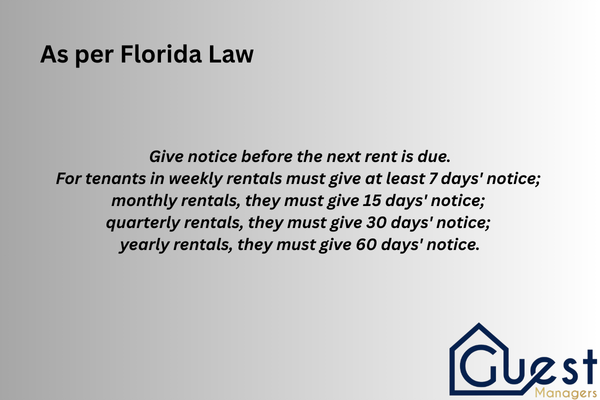
Florida law requires a 30-day written notice to end a month-to-month tenancy or to raise rent. This post discusses how to give proper written notice, how security deposit rules work, and what to do if a landlord breaks health codes or tries an illegal eviction.
Learn when to contact the county clerk of court and how to protect your rental income and rights. Read on.
Key Takeaways
- Florida month-to-month tenancies require 30-day written notice to end or raise rent, and week-to-week tenancies require 7-day notice.
- Landlords must return security deposits within 15 days or notify claims within 30 days, and tenants have 15 days to object.
- Landlords must keep units habitable, give 24‑hour notice for entry during reasonable hours, and may not cut utilities or change locks.
- For nonpayment, landlords must send a three‑day notice; courts may award damages up to three months’ rent and handle claims over $8,000 in county court.
- New 2026 rules update notice periods, allow electronic filings, and add security deposit alternatives like bonds or insurance.
Overview of Month-to-Month Tenancies in Florida
A month-to-month lease in Florida gives tenants and landlords flexible terms under Florida landlord-tenant law and chapter 83, part II. It often uses a simple lease agreement, allows 30-day written notice for termination or rent increases, and affects security deposits and rent payment rules.
Definition and Key Characteristics
Month-to-month leases are indefinite lease agreements that renew each month unless either party gives proper notice. Oral leases can cause misunderstandings, so put key terms in a written lease agreement, including rent amount, due date, lease length, and security deposit provisions under Chapter 83, part II of the Florida Residential Landlord and Tenant Act.
Tenants gain a right to possession similar to ownership, and the contract creates clear landlord obligations and tenant responsibilities, such as rent payment and maintenance duties.
Florida law treats some occupants differently, so hotel, motel, and rooming house residents who stay temporarily and keep another home elsewhere get limited protection against lockouts.
Employees who live in housing the landlord provides have tenancy tied to their pay cycle, weekly or monthly. Landlord-tenant laws and the laws of Florida guide notice requirements, handling of security deposits, and how property management must act.
Common Scenarios for Month-to-Month Agreements
After defining key terms, review common scenarios for month-to-month agreements. Landlords often use these rental agreements for short stays, transitions, or to test tenants after tenant screening, and the tenancy renews automatically each month unless a 30-day written notice arrives.
Tenants can end a month-to-month lease with 30 days written notice, due before the rent due date; for week-to-week, tenants must give a 7-day notice, received by the prior week’s due date.
Landlords may terminate for any lawful reason in private dwellings, but not for discrimination or in retaliation, and some wrongly claim a motel license frees them from the Florida Landlord Tenant Act.
If a party mails notice, add five days to the compliance period, excluding weekends and holidays; use certified mail or email notices to document timing. Courts and a judge may enforce unpaid rent claims with a writ of possession, and the Florida legislature sets these rules, so follow reasonable notice and the tenant’s handbook for full compliance.
Notice Requirements for Month-to-Month Leases
Florida law usually requires a 30‑day written notice to end a month‑to‑month lease. Tenants should keep a dated copy, document delivery, and consult on rent increases, repairs, security deposit holds, or non‑payment of rent under landlord & tenant rights.
30-Day Written Notice Rule
A month-to-month tenancy requires a 30-day written notice from either landlord or tenant before the rent due date. Any notice shorter than 30 days is ineffective, and notice must be delivered at least seven days before the rent due date to meet legal requirements.
If the tenant mails the notice, they should add add five days, excluding weekends and holidays, for delivery time. Hand delivery or certified mail with a return receipt gives proof for landlord & tenant rights and for disputes like non-payment of rent or repairs on a rental property.
The tenant’s notice should be given at the start of the rental period, and a witness who does not live in the household should be present when it is handed to the landlord. A copy of the notice should be kept for records, noting that agencies like the Office of Program Policy Analysis & Government
Accountability or the auditor general may review residential real property issues, including security deposits and fair housing act concerns.
Using certified mail helps protect against claims and helps to avoid invalid termination. Next, see Notice for Rent Increases.
Notice for Rent Increases
Landlords must give 30-day written notice for rent increases in month-to-month agreements. Oral notice is invalid under the Florida Landlord and Tenant Act, and the notice must state the new rent amount and the effective date.
If the tenancy is week-to-week, landlords must give 7 days written notice.
For notices sent by mail add five days to the notice period, excluding weekends and holidays. Personal delivery is advised to avoid disputes and limit liability, and tenants may seek legal advice or consult the tenant’s handbook, local Tampa Bay office guides, or references to the Florida Constitution on housing and rent control.
Rights and Responsibilities of Tenants
Tenants, including those in a mobile home, must pay rent on time, follow housing codes, and report needed repairs to keep the unit safe. They must give proper written notice to end a month-to-month lease and protect their rights in disputes over security deposits and late fees.
Payment of Rent
Rent and security deposits are the tenant’s duty, and they must pay on time, or the landlord can start eviction steps. Landlords must send a Three-Day Notice for nonpayment, state the amount due, and give three days, excluding weekends and legal holidays, to pay or vacate.
If the tenant pays the full amount within that three-day window, the landlord cannot proceed with eviction. If the landlord files for eviction, a Five-Day Summons requires a response within five days, excluding weekends and legal holidays, and the tenant must deposit all due rent with the court as the summons directs, or, in subsidized housing cases, only the tenant portion; failure to respond can lead to a motion for default and court action under housing codes, late fees rules, and procedures noted by the senate and the joint legislative budget commission, and names like pmi arrico may appear in filings.
Proper Notice to Terminate
After paying rent, give written notice to end a month-to-month lease. A tenant must provide 30-day written notice before the rent due date to terminate a month-to-month tenancy. If the lease ends early, or if the agreement has no duration clause, give at least seven days written notice, and deliver that notice at least seven days before the rent due date.
The notice must state the moving-out date and a contact address, and you must send it by certified mail or hand-deliver it. Keep a copy for your records, bring a witness who is not a household resident if you hand-deliver, and make sure rent payments are current when you deliver notice.
A tenant may negotiate early termination but must get a signed, written agreement. File records if needed; agencies such as the commission on ethics or the joint administrative procedures committee may review disputes, and the Florida historic capitol holds public legislative information.
Maintenance Obligations
Following proper notice to terminate, tenants and landlords must address maintenance obligations. Tenants must keep the premises clean and sanitary, dispose of garbage properly, and maintain plumbing fixtures.
They must not disturb neighbors or damage property, and they must comply with housing codes. Tenants should inspect the dwelling with the landlord, use an inspection checklist, and document damaged or missing items before moving in.
The first step is to request repairs from the landlord in writing. If the landlord does not fix reported issues within 7 days, the tenant may withhold rent but must save the withheld amount for court.
If a court finds the defects minor, the tenant could face eviction, back rent, court costs, and attorney fees. Reports from the joint legislative auditing committee and the florida government efficiency task force, alongside economic and demographic research, support clear local enforcement of repair rules.
Landlord Obligations under Florida Law
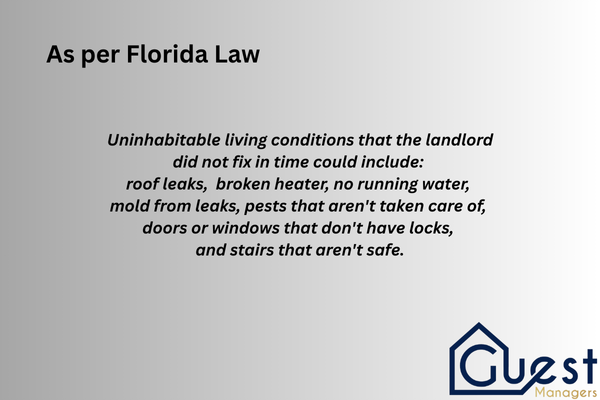
Florida law requires landlords to keep rental units safe and livable, following Florida Statutes Section 83.51 and local building codes. Landlords must handle security deposits correctly, make repairs after a tenant’s written notice, and allow safety checks by the local housing agency.
Providing a Safe and Habitable Property
Landlords must follow local housing, building, and health codes, or, if none exist, keep the unit structurally sound and operable, with working roofs, windows, and plumbing. They must provide adequate heating and water, keep common areas clean, remove garbage, and honor all terms in the lease.
Owners may enter for inspections or repairs with a minimum of 24 hours’ notice, during reasonable hours, from 7:30 a.m. to 8:00 p.m.; they may enter immediately in an emergency, with tenant consent, or if the unit is abandoned.
They may not cut off utilities, change locks, or remove doors or windows without a court order.
Proper Handling of Security Deposits
A landlord must return a security deposit within 15 days after a tenant moves out, or send a certified notice within 30 days if the owner intends to claim any amount. The notice must list the claim amount and reason, and it must follow the standardized format provided in this article.
If the owner fails to notify within 30 days, the owner loses the right to claim the deposit.
Tenants must object in writing within 15 days if they disagree with the claim. After an objection, the owner must return the remaining deposit within 30 days of that notice. If a tenant does not get the deposit back, the tenant can file a complaint in Small Claims Court.

Not all leases allow the owner to withhold the deposit as liquidated damages for early move out, so tenants should negotiate using the deposit to cover lease breaks.
Termination Rules for Month-to-Month Agreements
Landlords must give tenants a 30-day written notice to end a month-to-month tenancy, and they may send that notice by registered mail or by court e-filing. Tenants can contest an eviction in county court, and Florida Statutes protect against retaliatory eviction and improper security deposit handling.
Termination Without Cause
Tenancies that are month-to-month renew automatically, unless either party gives written notice. Florida law, under the Florida Landlord and Tenant Act and related Florida Statutes, requires a 30-day written notice for month-to-month terminations, and a 7-day notice for week-to-week tenancies.
A landlord may end a private dwelling tenancy for any reason that is not discriminatory or retaliatory, and the original lease terms control automatic renewals. Deliver notices in writing, aim for personal delivery, or mail them and add 5 days, excluding weekends and holidays, to the compliance period.
Retaliatory Eviction Protections
Florida Statutes bar landlords from evicting or penalizing tenants for good faith complaints to health or housing agencies, or for joining tenant groups, such as tenant unions or similar organizations.
Tenants may use written complaints, inspection reports, and emails as evidence in court, and the law treats retaliatory eviction as a defense in eviction proceedings. Landlords cannot justify an eviction by claiming the tenant has no other housing, lacks money to move, or has small children.
The rule applies to both written and oral leases. If a tenant wins, the court can award court costs and attorney fees to the prevailing party. Tenants should present written documentation and other evidence when they object to a landlord’s claim as retaliatory.
Proof of retaliatory action may defeat a landlord’s attempt to gain possession, and disputes over notice periods often follow these cases.
Frequently Encountered Issues
Tenants and landlords often clash over notice periods, security deposits, and the eviction process, and Florida Statutes shape most outcomes. Use lease agreements, court filings, and dispute resolution tools to fix problems, or read more resources to learn the steps and deadlines.
Disputes Over Notice Periods
Disputes often arise over whether proper notice was given for termination or rent increases. Florida law requires written notice at least seven days before the rent due date. If you mail notice, add five days, excluding weekends and holidays.
Oral notice carries no force for terminations or rent increases. Bring a witness who is not a household resident when you deliver the notice, and keep a copy for your records.
Follow the recommended notification format, include sender address and date, landlord address, and a clear outline of lease compliance issues. Cite the applicable Florida Statutes, set a seven day deadline for the landlord to act, and use certified mail when possible.
Failing to follow these steps can invalidate a termination or rent increase and spark litigation between landlord and tenant. The next heading covers handling illegal evictions.
Handling Illegal Evictions
Florida bans illegal evictions, even if rent is owed. Landlords may not cut off utilities, change locks, or remove doors or windows without a court order. Tenants can seek an injunction, and ask a court to restore services or access.
Successful claims may yield damages equal to three months’ rent, or actual damages, whichever is greater.
If damages are under $8,000, a tenant may file pro se in Small Claims Court; claims over $8,000 must go to County Court. Tenants who sue may face counterclaims for unpaid rent. Courts award court costs and attorney fees to the prevailing party.
Tenants who live in hotels, motels, or rooming houses as their only home keep protection from lockouts, except in limited circumstances. Read the next section for 2026 legal updates on notice rules and security deposit alternatives.
Legal Updates and Changes for 2026
Florida passed 2026 laws that change notice rules and security deposit options. Landlords must use updated lease forms, and courts and the state agency will accept electronic filings.
New Notice Rules and Additional Protections
New 2026 notice rules may change required notice periods for termination and for rent increases. State law may add stronger protections against illegal eviction actions, and courts may enforce those rules more strictly.
Free legal help can explain the new rules. The Prosperity Center at Sligh Magnet Middle School holds legal intakes and training on the first Tuesday of every month, 8:00 AM to 11:00 AM.
Security Deposit Alternatives
Following the new notice rules and extra protections, landlords and tenants can pick different security deposit options. New regulations and lease agreements in 2026 may list alternatives, such as surety bonds, deposit insurance, or a last month rent holdback.
Not all leases let landlords keep a deposit as liquidated damages if a tenant leaves early, so tenants may negotiate the deposit as their full financial obligation if they break a lease.
Landlords must notify tenants within 30 days of intent to claim a deposit, or they lose that right; tenants then have 15 days to object in writing. If a tenant objects, the landlord must return any remaining funds within 30 days after that notice.
The Tenant’s Handbook gives a standardized notification format, and tenants can sue in Small Claims Court if a landlord fails to return money or follow the 30 day rules.
Conclusion
Month-to-month tenancies, like the 30-day written notice rule and rent increase notice, paying rent on time, and keeping the unit safe, reduce disputes.
Landlords must follow the state statute, handle deposits properly, and offer safe housing. Tenants can protect themselves by using personal delivery or certified mail for notices and tracking receipts.
Landlords can make managing tenancies a truly worry-free, passive income by letting a full-stack property management do the heavy lifting. In Orlando, Fl, landlords can count on Guest Managers to keep up with rental laws and compliance, manage all rental property-related tasks from advertising, tenant screening, property maintenance, consistent rent collection, and all paperwork. Talk to us today and discover why having a full-stack, trouble-free property manager such as Guest Managers can grow your rental income and even your property portfolio.
FAQs
1. What is a month-to-month rental under Florida rental laws?
A month-to-month rental is a lease that renews each month, until the resident or property owner ends it. Florida rental laws treat it as a periodic lease, so either side can end it with proper notice.
2. How much notice do I need to end a month-to-month lease?
The notice time comes from your lease or Florida law, so check your rental agreement first. Many month-to-month leases use 15 or 30 days, but rules can vary, so ask a local housing office or a lawyer if you are not sure.
3. Can a property owner raise rent on a month-to-month lease?
Yes, a property owner can raise rent for a month-to-month rental. They must give written notice, in the time set by the lease or by Florida law. If the resident does not accept the change, they can move out after the notice ends.
4. What happens to my deposit, and how does legal removal work?
Florida rental laws let a property owner hold a deposit, and set rules for how and when it must be returned. For legal removal, the property owner must follow court steps, you have rights to respond, and you should get help from a lawyer or local housing agency if needed.