
Building a rental property portfolio is quite an enticing passive income, compared to crypto or stocks which can be unstable. The next question is how to build your rental portfolio steadily, enough to make a comfortable income.
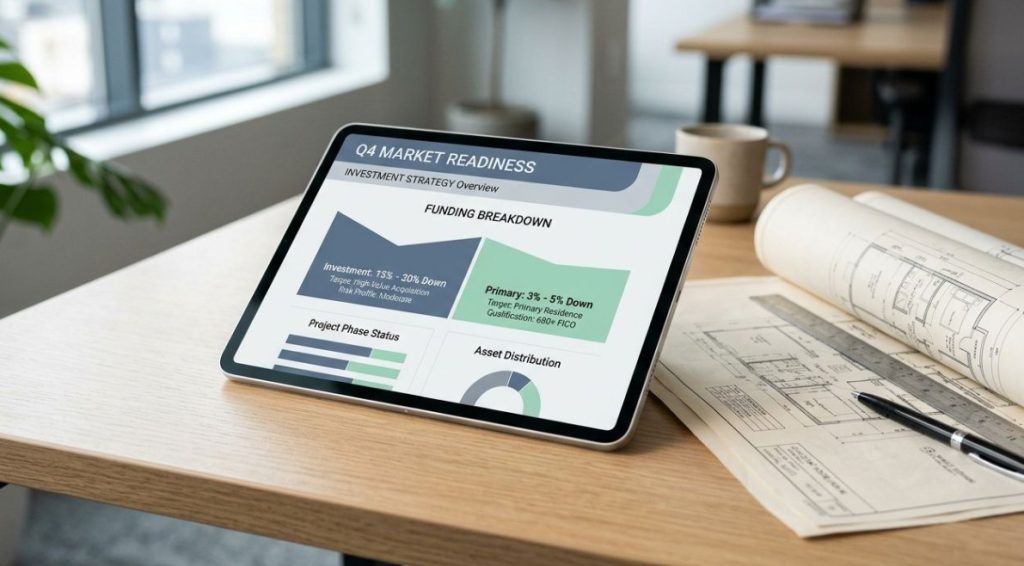
That being said, getting a loan to buy rental property is a viable option with the right strategy. Investment property loans require 15 to 30 percent down, much higher than the 3 to 5 percent for a primary home. This single fact changes your entire strategy.
The best loan depends on your situation. Your property type matters. Your investment timeline matters.
This guide explains every major loan type in simple terms. You’ll learn how conventional investment property loans work. You’ll see what DSCR loans offer and why portfolio loans matter.

Here are the facts you need to make smart choices today.
Key Takeaways
- Rental property loans require 15-25% down payments and 680+ credit scores, significantly higher than primary residence loans needing only 3-5% down.
- DSCR loans approve borrowers based on rental income instead of personal income, requiring minimum 1.25 debt service coverage ratios for qualification.
- Conventional investment loans offer 15-30 year terms with competitive rates, while hard money loans charge 8-15% with 6-24 month terms and balloon payments.
- Portfolio loans held by lenders offer flexible underwriting for multiple properties, accepting lower credit scores around 650+ with customized terms for experienced investors.

What are rental property loans and how do they differ from home loans?
Rental property loans fund investment properties that generate income. Home loans finance your primary residence where you live.
Investment property lenders structure these loans differently because rental properties carry more risk. They depend on tenant payments and market conditions, not just your personal income.
What is a rental property loan and what is its purpose?
A rental property loan is money you borrow to buy, fix up, or refinance an income-producing property. You use this loan to purchase investment properties, not homes where you live.
The lender focuses on the rental income your property will earn. These loans help real estate investors build and grow their portfolios with multiple rental units.
Investment property loans turn your real estate dreams into income-producing assets.
The purpose is simple. These loans give investors the capital they need to acquire rental units and generate ongoing revenue.
Banks structure these loans differently from conventional mortgages because investment properties carry different risks. Your rental income becomes the main factor lenders examine, not your personal salary.
Down payments run higher for investment property loans. Credit score requirements are stricter. Lenders use tools like QuickBooks and property management software to verify your income and track cash flow.
How are rental property loans different from primary residence loans?
Rental property loans and primary residence loans serve very different purposes. Lenders treat them quite differently. The stakes are higher for investment properties, so the rules change in major ways.

| Loan Feature | Primary Residence Loans | Rental Property Loans |
|---|---|---|
| Down Payment Required | 3-5% down | 15-25% down |
| Credit Score Minimum | Varies by lender; often 620+ | 680+ required |
| Interest Rate Range | Base rate (market dependent) | 0.5-1.5% higher than primary homes |
| Income Documentation | Standard requirements; basic pay stubs | Stricter; tax returns, profit/loss statements |
| Cash Reserves | Not typically required | 3-6 months of mortgage payments |
| DSCR Evaluation | Not used | Commonly used metric for approval |
| Loan Purpose | Owner occupancy only | Income generation from tenant payments |
| Lender Focus | Borrower’s ability to pay | Property cash flow and investment viability |
Down payments hit much harder for investment properties. Lenders want 15 to 25 percent down compared to just 3 to 5 percent for your primary home. This larger upfront investment protects the lender if property values drop or rental income slows.
Credit scores must be stronger for rental deals. Most lenders require 680 or higher for investment property loans. Primary residence loans may accept scores starting around 620.
Interest rates climb on investment property mortgages. According to mid-2026 rate data tracked by Bankrate and Sistar Mortgage, 30-year fixed rates for conventional investment properties typically sit in the 7 percent to 7.5 percent range. This represents a 0.5 percent to 1.5 percent premium over primary residence mortgages. This premium reflects the increased risk lenders assume.
Documentation demands intensify for rental property applications. Lenders request tax returns, profit and loss statements, and detailed financial records. Primary residence applicants typically submit basic pay stubs and employment verification.
Cash reserves become mandatory for investment loans. Lenders require 3 to 6 months of mortgage payments sitting in reserve accounts. Based on 2026 underwriting guidelines highlighted by JVM Lending, you must have enough liquid assets to cover the property’s PITIA (Principal, Interest, Taxes, Insurance, and Association fees) after your down payment and closing costs are paid. Primary residence borrowers rarely face this requirement.
The Debt Service Coverage Ratio, or DSCR, shapes investment lending decisions. Lenders calculate whether rental income covers all debt payments. Primary residence loans ignore this metric entirely.
Purpose separates these two loan types. Primary residence loans finance owner-occupied homes where you live. Investment property loans fund rental units that generate tenant income.
Types of loans available for rental properties
Real estate investors can pick from several loan types to fund their rental properties. Each type has its own strengths and rules.
You’ll find conventional investment property loans, debt service coverage ratio loans, portfolio loans, bridge loans, and home equity options all available to match your specific needs.
What is a Conventional Investment Property Loan?
A conventional investment property loan is a mortgage that banks and credit unions offer to investors who want to buy rental properties. These loans follow strict rules set by Fannie Mae and Freddie Mac, which are large mortgage companies.
According to the Federal Housing Finance Agency’s 2026 conforming loan limits announcement, the baseline conforming loan limit for a one-unit property is $832,750 (and up to $1,249,125 in high-cost areas). This exact dollar figure tells real estate investors the absolute maximum they can borrow on favorable conventional terms before they are forced to use a more expensive jumbo or non-QM loan.
Banks use these guidelines to decide who gets approved and what terms they offer. Investors must put down 15 to 25 percent of the property price upfront. The loan terms run for 15 to 30 years, giving investors time to pay back the money.
Conventional conforming mortgages offer competitive interest rates. You pay less in interest compared to hard money loans or DSCR loans. These loans work well for investors who want stable, low-cost financing for the long term.
Getting approved for a conventional investment property loan takes more work than other loan types. Lenders ask for extensive documentation and income verification to make sure you can pay back the money.
You need a credit score of at least 680 to qualify. Property investors must show proof of their income and explain where their money comes from. Underwriting teams review all your financial papers carefully.
These loans work best for financing primary or secondary residences and smaller portfolios, not large investment groups. The stricter qualification criteria mean fewer surprises later, and you get peace of mind knowing your loan follows established banking standards.
Conventional loans give real estate investors a solid foundation. The rules are clear, the rates are fair, and the path forward is straight.
How does a Debt Service Coverage Ratio (DSCR) Loan work?
A DSCR loan works differently from standard mortgages. Lenders approve you based on the rental income your property generates, not your personal paycheck.
The debt service coverage ratio itself is calculated by dividing your rental income by your mortgage payment, taxes, and insurance. Most lenders require a minimum DSCR of 1.25 or higher to approve your application.
According to Q2 2026 origination market data from PeerSense, securing the most competitive DSCR interest rates in 2026 actually requires a ratio of 1.25 or higher, combined with a 740+ credit score and at least 25 percent down. This means your property must earn at least 1.25 dollars for every dollar you owe in payments and expenses.
No personal income verification is required, so your W-2 income doesn’t matter. Your approval depends entirely on the property’s income-generating potential, not your debt-to-income ratio.
These loans typically offer 30-year terms. You can borrow up to 75 to 80 percent of the property’s value.
DSCR loans work best for real estate investors with multiple properties or those focusing on cash-flow-based approval. Interest rates for these loans tend to be higher than conventional investment property loans.
Visio Lending specializes in DSCR loans and makes the approval process smooth for investors. You can use DSCR loans for various rental strategies, including short-term rentals, vacation rentals, and fix-and-flip projects.
The application process moves faster because lenders skip personal income checks. They focus on property performance instead. Your rental income, not your personal earnings, qualifies you for the loan amount you need.
What is a Portfolio Loan and who should consider it?
Portfolio loans sit on the lender’s books instead of selling on the secondary market. This means the lender keeps the loan and sets their own rules.
Lenders can offer more flexible underwriting with portfolio loans. They approve loans that don’t fit conventional guidelines. Multiple properties get financed in one package.
Investors with unique financial situations find these loans helpful. Real estate investment analytics tools help investors track multiple properties.
Portfolio loans often have higher interest rates than conventional loans. The trade-off is worth it for investors needing custom terms. Corevest and other lenders offer portfolio loans to qualified investors.
Experienced investors with multiple rental properties should consider portfolio loans. Investors looking to expand their rental property portfolio quickly benefit most.
These loans work well for investors who don’t meet standard bank requirements. Limited liability company owners often use portfolio loans for tax benefits.
Portfolio loans have more lenient documentation requirements than government-backed loans. Investors using real estate investment strategies that require speed should apply.
The flexibility of portfolio loans lets investors customize their investment approach. Roc Capital and similar lenders specialize in these custom loan options. Investors managing several investment properties at once find portfolio loans ideal.
When should I use Short-Term or Bridge Loans?
Short-term loans and bridge loans serve investors who need fast cash for time-sensitive deals. Fix-and-flip loans offer up to roughly 90 percent loan-to-cost leverage and include rehab funding for properties needing quick repairs.
Hard money loans provide up to 70 percent of the after repair value. They close rapidly with minimal paperwork. These loans work best for rapid acquisitions, fix-to-rent strategies for BRRRR investors, or situations where traditional financing falls short.
As reported in ATTOM’s Q1 2026 U.S. Home Flipping Report and current lender rate sheets, average interest rates for short-term bridge and fix-and-flip loans range from 9.5 percent to 12.5 percent. Investors must carefully model these rates against the typical 25.4 percent gross ROI of a U.S. home flip. Loan terms run from 6 to 24 months.
Large upfront fees and balloon payments are common features you should expect. This financing style suits real estate investors pursuing aggressive growth or managing urgent property opportunities.
Your exit strategy determines whether short-term loans make sense for your rental property investment. You must have a clear plan, such as resale or refinancing, before the loan matures.
Fix-to-rent loans cover purchase, rehab, and refinancing with 85 to 90 percent loan-to-cost leverage. They work well for investors building portfolios quickly. Bridge loans fill gaps between property purchases and permanent financing, allowing you to move fast in competitive markets.
These options demand careful planning and strong financial reserves. You face higher costs and shorter repayment windows. Experienced investors and those handling new construction loans often use these tools to capitalize on market timing and property potential.
How do Home Equity Loans (HELOAN) and Lines of Credit (HELOC) work for rentals?
Home equity loans and lines of credit tap into the value you already own in your primary residence. You use your home as collateral to access cash for rental property investments.
A home equity loan gives you a lump sum of money upfront. A HELOC works like a credit card. You access funds as you need them from a revolving line of credit.
Both options offer lower interest rates compared to other investment loans. This makes them smart choices for investors with significant equity in their current homes. You can use these funds for down payments, property renovations, or new acquisitions.
HELOCs bring flexibility that fixed-rate loans cannot match. Rates on these accounts may shift over time. Your monthly payments change as interest rates change, so you need to plan your budget carefully.
These tools work best for experienced investors who understand market risks. They need solid financial plans in place. One major drawback exists, though. You increase your risk if home values drop since your primary residence serves as collateral.
How do I choose the best loan for my rental property?
Picking the right loan for your rental property takes real thought about your goals, your money, and what works best for your situation.
How does your investment strategy affect loan choice?
Your investment strategy drives which loan you should pick. Flippers buying properties to resell fast benefit from fix-and-flip loans that offer up to 90 percent loan-to-cost leverage.
BRRRR investors, who buy, rehab, rent, refinance, and repeat, gain from fix-to-rent loans. These cover purchase costs, rehab work, and refinancing in one product.
Long-term rental investors often select DSCR loans. These qualify based on the property income rather than personal income. Portfolio loans work best for investors managing multiple properties with unique financing needs.
Your specific rental approach determines loan terms and rates you should evaluate. Investors scaling assets with five or more units benefit from commercial multifamily loans that support larger portfolios.
Short-term loans serve investors making near-term acquisitions or quick rehabs. Long-term loans support buy-and-hold strategies. Hard money loans help investors seeking quick closings or dealing with distressed assets that traditional lenders avoid.
Home equity products like HELOC or cash-out refinancing allow you to leverage existing property equity for new investments.
What loan terms and rates should I evaluate?
Once you settle on an investment strategy, comparing loan terms and rates becomes critical. This step separates smart investors from those who overpay or get stuck with unfavorable conditions.

| Loan Factor | What to Evaluate | Key Consideration |
|---|---|---|
| Interest Rates | Investment loans typically run 0.5% to 1.5% higher than primary residence rates. DSCR and hard money loans often exceed conventional loan rates. Hard money lenders charge between 8% to 15% depending on risk factors. | Compare rates across multiple lenders. A 1% difference on a $300,000 loan costs thousands over time. Lock in rates when markets favor borrowers. |
| Repayment Terms | Conventional loans offer 15 to 30 year repayment periods. Short-term loans last 5 to 10 years or less. Hard money loans require repayment within 6 to 24 months, often with balloon payments due at maturity. | Longer terms mean lower monthly payments but more interest paid over time. Shorter terms build equity faster yet strain monthly cash flow. Calculate which aligns with rental income projections. |
| Upfront Costs | Investment property loans carry higher upfront fees and closing costs than standard mortgages. Some lenders charge application fees, appraisal fees, and title insurance premiums upfront. | Budget for closing costs between 2% to 5% of the loan amount. Factor these into total investment calculations. Compare fee structures across lenders before committing. |
| Prepayment Penalties | Many investment loans impose prepayment penalties or early-exit fees if paid off before maturity. Penalties vary by lender and loan type. Some loans allow penalty-free prepayment after specific periods. | Clarify penalty structures before signing. If refinancing seems likely, seek loans without prepayment restrictions. Calculate penalty costs against potential savings from refinancing. |
| DSCR Requirements | Debt Service Coverage Ratio loans evaluate property income against debt obligations. Lenders typically require minimum DSCR ratios of 0.75 to 1.25 depending on loan type. Higher ratios mean stronger cash flow documentation needed. | Understand how lenders calculate DSCR using rental income projections. Properties with strong rental income qualify easier. Weak rental markets require higher down payments or DSCR documentation. |
| Down Payment Requirements | Conventional investment loans typically require 20% to 25% down. DSCR loans may accept 15% to 20% down depending on property performance. Portfolio loans offer flexibility with lower down payment options for qualified borrowers. | Higher down payments lower monthly obligations and improve lender approval odds. Lower down payments preserve cash for renovations or additional investments. Balance liquidity needs with loan approval chances. |
| Fixed vs. Adjustable Rates | Fixed rates remain constant throughout the loan term, providing payment predictability. Adjustable rates start lower but increase after initial periods, typically every 1 to 5 years. Investment property loans favor fixed rates for stability. | Fixed rates protect against interest rate spikes affecting rental income. Adjustable rates suit investors planning quick exits or refinancing. Lock in fixed rates when they remain historically low. |
Interest rate comparisons demand attention to the full picture. Calculate total interest paid over the entire loan term, not just monthly payments. A lower rate saves substantially across decades.
Short-term loans like bridge financing cost more monthly but accelerate equity building. Long-term conventional loans spread costs across 30 years, reducing monthly strain on rental income.
Closing costs and fees add significant expense to investment deals. Some loans require appraisals, credit reports, and title searches costing $1,000 to $3,000 or more. Lenders like Kiavi and Visio Lending disclose these upfront, letting investors plan accurately.
Prepayment penalties matter when exit strategies include refinancing or selling. Ask about these fees before you sign any loan documents.
What are the down payment and credit score requirements?
Down payment and credit score requirements shape your ability to secure rental property financing. Lenders set strict standards to protect their investments, so understanding these benchmarks helps you prepare.
| Loan Type | Down Payment Range | Minimum Credit Score | Key Notes |
|---|---|---|---|
| Conventional Investment Property Loan | 15-20% | 680+ | Most common option; favorable rates at higher scores; requires solid cash reserves of 3-6 months |
| DSCR Loan | 20-25% | 680 minimum | Debt Service Coverage Ratio determines qualification; rental income supports the loan payment; less emphasis on personal credit than conventional loans |
| Portfolio Loan | 10-20% | 650+ | Held by lender rather than sold; offers flexibility; carries higher interest rates and fees to offset risk |
| Bridge Loan | 20-30% | 700+ | Short-term financing; used during transitions between properties; faster approval process required |
| Home Equity Line of Credit (HELOC) | Varies, typically 10-20% equity required | 680+ | Uses existing home equity; flexible access to funds; variable interest rates apply; excellent for down payments on new rental investments |
| Private or Hard Money Loan | 20-40% | 620+ | Lower credit requirements; significantly higher rates and fees; short repayment terms; fastest funding available |
| FHA Loan with House Hacking | 3.5% | 580+ | Allows owner-occupancy in one unit; rent other units to reduce costs; creative strategy for minimizing upfront cash |
| VA Loan with House Hacking | 0% | 620+ | Available for eligible veterans; no down payment required; live in one unit, rent the others; powerful wealth-building tool |
Credit scores remain the foundation of investment property lending. Most lenders require scores of 680 or higher to access favorable rates and terms.
Scores below 680 still qualify, but expect higher interest costs and stricter conditions. Private or hard money lenders operate with more flexibility, accepting scores around 620, yet they charge premium rates in exchange for that flexibility.
Down payment amounts vary significantly based on loan type. Conventional investment property loans demand 15 to 20 percent down. DSCR loans typically require 20 to 25 percent down, since rental income must cover the monthly payment reliably.
Portfolio loans offer some relief. They accept 10 to 20 percent down, though lenders charge higher rates to compensate for keeping the loan in-house.
Cash reserves matter more than many borrowers realize. Lenders typically require you to maintain 3 to 6 months of cash reserves after closing. These reserves demonstrate financial stability and your ability to cover expenses if rental income dips temporarily.
Stronger reserves can sometimes offset a lower credit score or smaller down payment.
House hacking strategies unlock creative financing paths. FHA loans allow as little as 3.5 percent down when you occupy one unit and rent the others. VA loans offer even better terms, potentially requiring zero down for eligible service members.
Both approaches minimize upfront costs significantly. They make real estate investment more accessible.
Using your primary residence’s equity through cash-out refinancing or HELOCs provides another avenue for down payments. You can fund investments in new rental properties without depleting savings. This strategy works well for experienced investors building multi-property portfolios.
Frequently asked questions about rental property loans
How many rental properties can I finance with loans?
Most conventional loans cap you at 10 financed properties. Portfolio loans let you finance more properties under one loan agreement without conventional limits. Kiavi offers jumbo mortgages starting at $3 million for larger portfolios.
What documents do I need to qualify for a rental property loan?
You need a valid ID, a schedule of all investment properties, proof of purchase agreement, construction budgets (if applicable), title agent contact info, recent tax returns, bank statements, property tax records, insurance docs, rent rolls or leases, and profit/loss statements. Some lenders like Kiavi and Visio Lending focus on property cash flow instead of personal income docs.
The Next Step: Jumpstarting Your Profitable Rentals
Getting the loan for your rental investment is just the first step in passive income, making it profitable is another big issue. You want to make it generate income as soon as possible to not miss your monthly amortizations. This is where property management companies play a crucial role.
Property managers keep your occupancy rate high with aggressive advertising, screen tenants meticulously, maintain your properties so that happy tenants can leave good reviews, provide consistent rent collection, and handle all the legal compliance. They may have fees, but with a lowered vacancy rate and worry-free management of your properties, they more than just cover their fees.
In Orlando, the theme park capital of the world with more than a dozen theme parks and 75 million visitors a year, you can build your rental portfolio and be profitable with us at Guest Managers, offering a concierge-type of rental maintenance service. As a team of licensed real estate agents as well, we can also assist in buying vacation rentals, and then maintain these for you, even if you are from another state. Contact us today to get started in profitable investments.
Conclusion
Choosing the right rental property loan shapes your success as a real estate investor. You now understand the main options available to you.
Conventional investment loans, DSCR loans, portfolio loans, and bridge loans each serve different investor needs and timelines. Your investment strategy, credit score, down payment funds, and property type should guide your final choice.
Start by evaluating your specific situation. Compare rates from lenders like Kiavi, Visio Lending, LendingOne, and Lima One. Then take action on the loan that fits your goals.
FAQs
1. What types of loans work best for buying rental property?
Conventional mortgages are most common, typically requiring 20-25% down for investment properties. You can also use a home equity loan (HELOAN) to tap existing property equity or finance through a limited liability company (LLC) for liability protection. Lenders like SBG Funding and Bluevine specialize in investor-focused programs.
2. Can I use a second home loan for rental property?
No, second home loans require you to personally occupy the property for at least 14 days annually. Investment property loans are designed for full-time rentals and better align with rental income goals.
3. How do relationship pricing programs help rental property investors?
A relationship pricing program typically reduces your rate by 0.25-0.50% when you bundle checking, savings, and loan services. CNBC Select regularly features these programs as a way to lower borrowing costs.